

💡 What is Hair Transplantation?
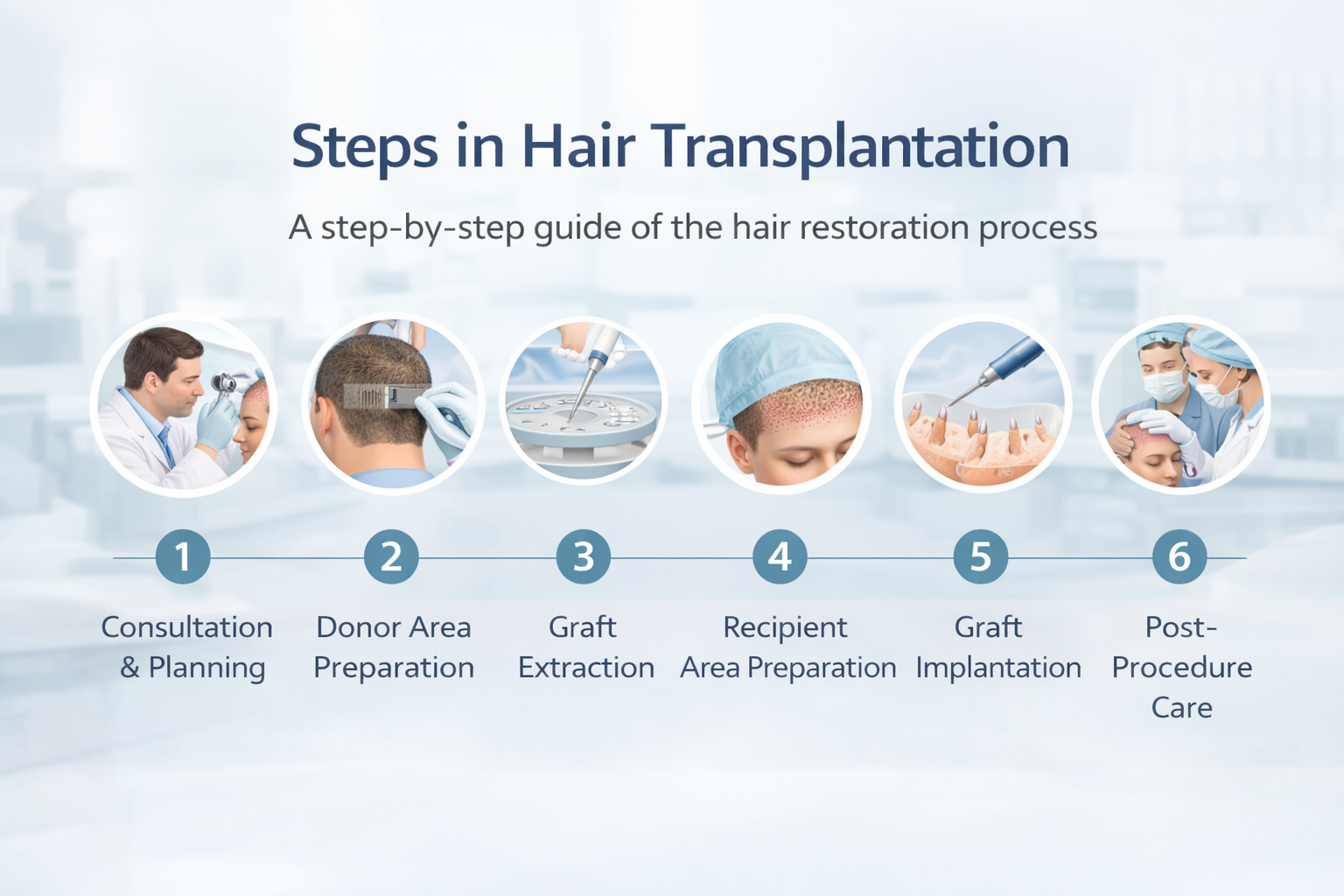
Hair transplantation is a minimally invasive surgical procedure used to treat permanent hair loss. Healthy hair follicles are taken from a donor area (usually the back or sides of the scalp) and implanted into thinning or bald areas. The transplanted hair grows naturally and permanently.
Step 1 - 1. Consultation & Planning
A detailed scalp and hair density evaluation is performed to understand hair loss patterns. Based on facial proportions, a natural hairline is designed and the required graft count and technique are finalized.
Step 2 - Donar Area Preparation
The donor area is trimmed, cleaned, and prepared under sterile conditions. Local anesthesia is administered to ensure a comfortable and pain-free procedure.
Step 3 - Graft extraction
Healthy hair follicles are carefully extracted using advanced techniques such as FUE or FUT. The grafts are preserved in a controlled solution to maintain their strength and survival.
Step 4 - Recipient Area Preparation
Tiny channels are created in the treatment area with precise angles and direction. This step ensures natural hair growth and a realistic appearance.
Step 5 - Graft implantation
The harvested follicles are implanted carefully into the prepared sites. Hair density and pattern are customized to blend seamlessly with existing hair.
Step 6 - Post-Procedure Care
Patients are discharged on the same day with minimal downtime. Temporary redness or swelling may occur, and detailed aftercare instructions are provided.


Recovery & Results
- First 7–10 days: Healing phase; scabs fall off naturally
- 2–3 months: Temporary shedding (“shock loss”)—normal
- 3–6 months: New hair growth begins
- 9–12 months: Final visible results with full density
 All services